Vietnam History Museum
The oldest of its kind in Vietnam, Vietnam History Museum was renovated from the French Ecole Française d’Extreme Orient.
.jpg)
Vietnam History Museum lies silently on the back of the renowned Hanoi Opera House, at No.1 Pham Ngu Lao Street, Hoan Kiem District. This museum was built in 1926 under the name Louis Finot Museum by the Ecole Française d’Extreme-Orient and finish in 1932. After being taken over by Vietnamese Government, the museum changed its official name to Museum of Vietnam History and opened to the public on 3 September 1958.
Although the museum is only 2,000m2 in total, it provides a great overview of the history of Vietnam thanks to chronological sequence. The site has two floors, among which Vietnam’s history is divided into 10 different sections, from the prehistoric era to the day when President Ho Chi Minh read out the Declaration of Independence giving birth to Vietnam.
In here preserving more than 7,000 precious objects, some aged thousand years old which represent the cultural diversity of the country. Historic objects exhibited here are not only Vietnamese origin but also consists other culture like China, Japan, Thailand and especially Champ with more than 50 stone-engraved back to 7th-13th centuries.
Visitors may have to make full use of imagination as well as sensitivity to understand artifacts and relics exhibited in the museum. This is good chance for you to test your ability to perceive art because the descriptions of the objects are quite sparse that most of them are in Vietnamese and only indentify what the object is rather than what is its meaning.
.jpg)
How to get there
Vietnam History Museum opens from 8:00am – 16:30pm with a ticket price of VND 20,000 (US$ 1) and a bonus of VND 15,000 (US$ 0.75) if you want to use camera inside the museum. The museum is quite easy to find as it is located right on the back of Hanoi Opera House, at No.1 Pham Ngu Lao Street, Hoan Kiem District.
See more
-

Discovery Vinh Hung Ancient Tower
Vinh Hung tower is an ancient and unique architecture that has been preserved in Mekong Delta . The tower has a value about artistic culture and was discovered in 1911 by...
-
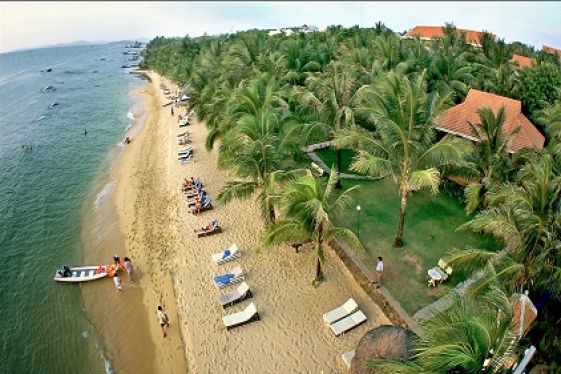
Back beach (Bai Sau)
Back beach in Vung Tau is also known as Thuy Van beach, has a charming landscape, large space, with a wide spread out and fine sand. So the major of tourists traveling to...
-
Sung Sot Cave
Sung Sot Cave is situated on Hon Bo Island and one of the most beautiful and largest caves in Halong bay . Sung Sot Cave is filled with unsual rock formations, which are...
-
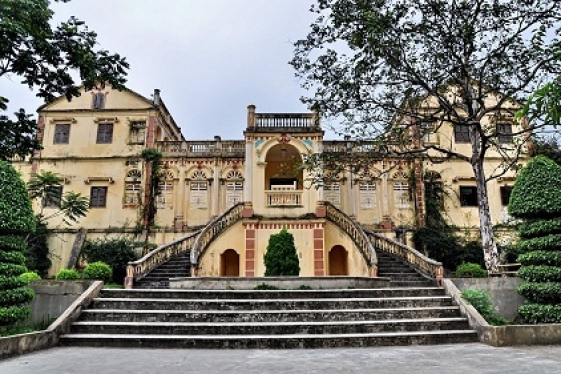
Hoang Yen Chao Castle
Hoang Yen Chao Castle is a unique architectural construction combining Eastern style and Western style. Built in the 20th century, it belongs to Na Hoi Tho Village, Bac Ha...
-
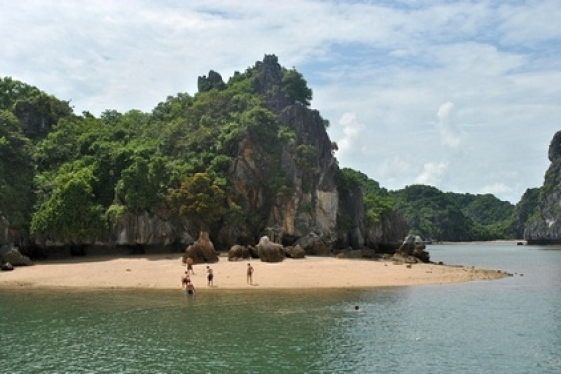
Lan Ha Bay
Located adjacent to Halong Bay, Lan Ha Bay is a peaceful bay in Cat Ba Islands system. Lan Ha Bay has about 400 large and small islands covered with green trees and...
-
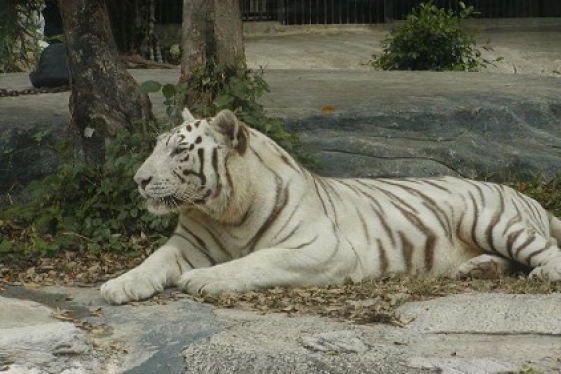
Ho Chi Minh City Zoo & Botanical Gardens
Founded more than 100 years ago, Ho Chi Minh City Zoo and Botanical Gardens (aka Saigon Zoo and Botanical Gardens) are listed as one of the oldest zoos in the world, opened...
-
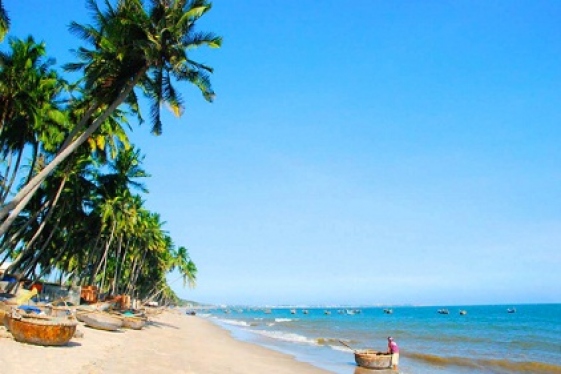
The beautiful Mui Ne beach
Mui Ne beach is one of the most famous attractions in Phan Thiet and it has a natural beauty with white sand, blue sea and green coconut tree line along the beach.
-
.jpg)
Hue Imperial Citadel
Famously being one of Vietnam’s seven UNESCO World Heritage Sites, the Imperial City of Hue has long been a must-see attraction for tourists visiting a hidden charm of...
-
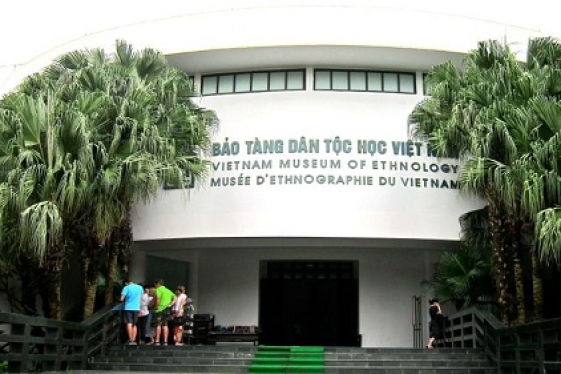
Vietnam Museum of Ethnology
This is the most recent yet probably the largest and undoubtedly the most interesting Museums in Hanoi and Vietnam.
-
.jpg)
Ngoc Vung Island
Ngoc Vung Island is a romantic place which possesses primitively beautiful landscapes with freshest and most delicious seafood of the bay at the lowest price.
Destinations
Most popular tours
-
Vietnam beach vacation
Price from: 1.250 US$
-

Vietnam Discovery
Price from: 1.035 US$
-
Explore Vietnam
Price from: 640 US$
-

Signature Vietnam
Price from: 2.220 US$
Business info
Vietnam Local Guide
- Address: 18th Floor, VTC Online Tower, 18 Tam Trinh Str.,Hai Ba Trung Dist., Hanoi, Vietnam
- Email: info@vietnamguider.com
- Phone: (+84) 0904989890
- Hotline: (+84) 0904989890